Basement Data Centers and the Hiring Managers Who Believe Them
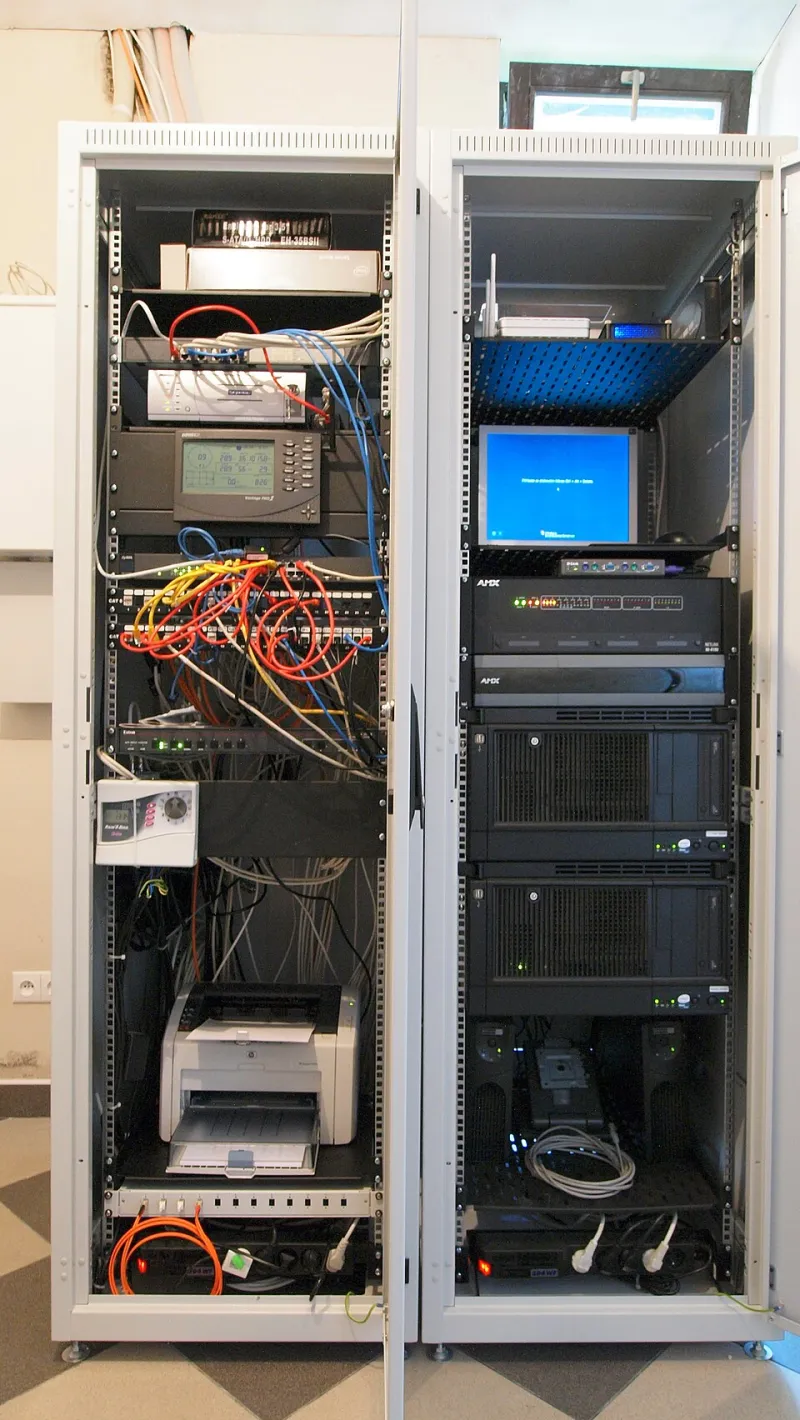
Photo: Jan Prucha, CC BY-SA 3.0, via Wikimedia Commons
Somewhere in suburban Ohio, a systems administrator is racking a decommissioned Dell R720 next to a chest freezer. In a Phoenix apartment, a help desk analyst is running a three-node Kubernetes cluster on Raspberry Pi boards duct-taped to a bookshelf. Neither of these projects appears on a org chart. Both may matter more to their next employer than anything on their current one.
The home lab has long been treated as a hobby — the IT equivalent of a garage band. That perception is fading. As hiring managers grow skeptical of title inflation and keyword-stuffed resumes, the homelab has quietly become one of the most verifiable signals in technical recruiting. It cannot be claimed. It can only be built.
Why the Lab Outranks the Title
Résumés assert; labs demonstrate. A candidate who lists "cloud experience" invites doubt. A candidate who links to a documented Proxmox cluster with automated backups, VLAN segmentation, and a postmortem write-up on the time they bricked a node invites questions — the good kind.
There is also a durability problem with job titles. Enterprise roles are often narrow. A person who spent two years maintaining a single legacy application may hold a senior title while never touching networking, storage, or identity. A homelab, by contrast, exposes the whole stack. It shows breadth that org charts rarely permit.
Finally, the lab demonstrates the trait hiring managers say they cannot test for in interviews: self-directed persistence. Nobody assigned that weekend spent migrating a media server to ZFS. The candidate did it because they wanted to understand it.
Mapping Lab Projects to Enterprise Roles
Not all homelab work translates equally. Some projects map cleanly onto roles American employers are actively hiring for:
- Cloud or DevOps engineer: Terraform-provisioned environments in a personal AWS or Azure free tier, GitOps pipelines, container orchestration on a small Kubernetes distribution like k3s.
- Security analyst: A pfSense or OPNsense firewall, network segmentation, a Security Onion or Wazuh instance parsing logs from your own devices, and — critically — write-ups of what you detected.
- Systems administrator: A virtualization host running TrueNAS, Active Directory in a lab domain, automated patching via Ansible.
- Network engineer: VLANs, inter-VLAN routing, and a used managed switch, documented with real diagrams.
The common thread is that each project produces artifacts: configurations, documentation, incident notes. Artifacts are what survive the interview.
Documentation Is the Multiplier
An undocumented lab is a hobby. A documented lab is a portfolio. The difference is a handful of habits:
- Keep a lab journal. A simple markdown repository noting what you built, why, and what broke. Dates matter; they show sustained effort rather than a pre-interview scramble.
- Write postmortems. A short essay titled "How I recovered my homelab after a power supply failure" demonstrates incident response instincts better than any certification exam objective.
- Version everything. Configs in Git, even privately, signal operational discipline.
- Curate, don't dump. Three polished write-ups beat forty screenshots. Hiring managers skim.
Handling the Objections
Two criticisms come up in every hiring conversation, and both deserve honest answers.
"Homelabs don't face real users or real stakes." True — and worth acknowledging directly. The counter is that labs demonstrate methodology, not scale. A candidate who practices change control on their own equipment understands why change control exists.
"It's all toy hardware." Often, yes. But enterprises increasingly run software-defined everything; the commodity-hardware critique has aged poorly. A k3s cluster on single-board computers is architecturally identical to what runs in production at plenty of mid-market US companies.
A Practical Starting Sequence
For professionals looking to convert spare evenings into career capital, a reasonable sequence looks like this:
- Pick one target role and its two most common interview themes.
- Build the single smallest lab that exercises both — resist the urge to buy rack gear first.
- Document each phase in a public repository or blog.
- Write one postmortem per failure. Failures are the most persuasive content you will produce.
- Add a single line to your résumé linking to it, under a heading like "Independent Technical Projects."
The total cash outlay can be under two hundred dollars. The time investment is real, but it compounds: the same lab that answers interview questions today becomes the testbed for next year's certification prep.
The Signal Beneath the Signal
What hiring managers are ultimately reading is not the hardware. It is the evidence of curiosity sustained without external reward — the same quality that separates engineers who grow from engineers who plateau. Job titles describe where someone has been. A well-documented lab describes where they are going, and increasingly, it is the first thing a serious employer wants to see.