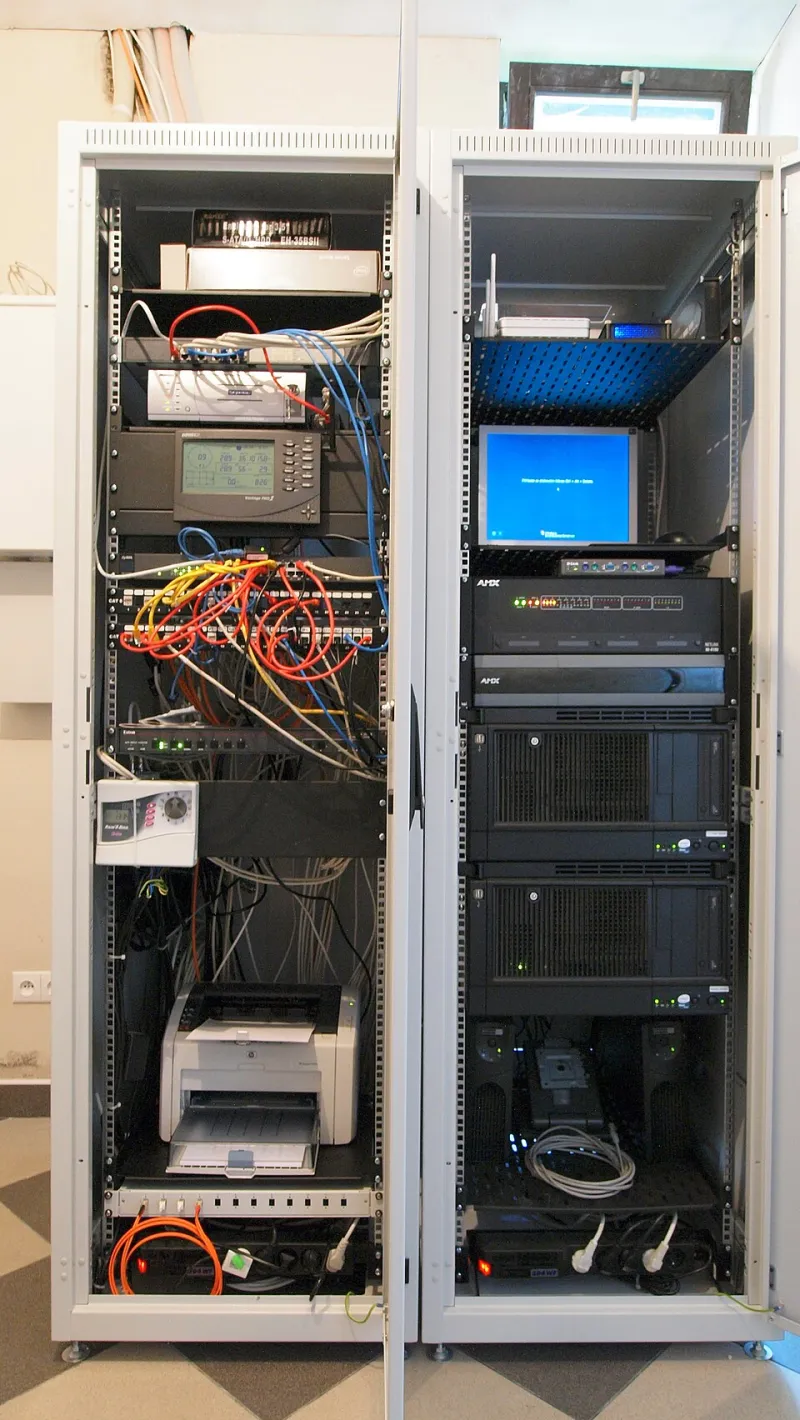
Every IT Department Has a Second Map: Learning to Read the Informal Hierarchy
Photo: Franklin Delano Roosevelt, Public domain, via Wikimedia Commons
Somewhere between the HR portal and the reality of a Tuesday morning outage sits a second organizational chart. It is never printed, never updated, and never discussed in a performance review. Yet nearly every experienced IT professional can sketch it from memory within a week of joining a new team: the database administrator whose phone rings before the ticket queue even knows there is a problem, the desktop technician who handles every request from the executive floor, the contract engineer whose engagement ended two budget cycles ago but whose knowledge nobody has replaced.
Understanding this informal hierarchy is not office politics in the pejorative sense. For IT professionals building a career in American enterprise environments, it is a practical skill — arguably as important as any certification exam.
Why the Official Structure Breaks
Formal org charts are designed for budgeting, compliance, and reporting lines. They are built around headcount and cost centers, not around how work actually flows during an incident. When a storage array starts throwing errors at 3 p.m. on a Friday, nobody consults the reporting structure. They call the person they trust.
That trust is earned through a combination of competence, responsiveness, and institutional memory — the last of which is chronically undervalued in a job market that rewards job-hopping. The senior systems administrator who has watched the same ERP application migrate through three owners knows which integrations are load-bearing and which are folklore. No document captures that. She is the second map.
The Common Archetypes
While every organization differs, the same figures tend to reappear:
- The First Call. Whatever the technology — a legacy database, a creaky VPN concentrator, the fax-to-email gateway accounting refuses to surrender — this person owns it informally. Their title rarely reflects their actual criticality.
- The Executive Whisperer. Usually a desktop support tech or field engineer who has earned the confidence of leadership. Requests routed through them move faster than anything submitted through the service portal.
- The Perpetual Contractor. Brought on for a six-month migration in 2019, still billing in 2025 because the knowledge transfer never happened. They often hold more operational context than several salaried employees combined.
- The Cross-Department Bridge. The person in IT who marketing, finance, and facilities all know by name. When interdepartmental friction stalls a project, this is who gets asked to smooth it over.
How to Map It in Your First 90 Days
New hires typically spend their onboarding learning systems. The sharper ones also spend it learning people. Three practices help:
Watch who gets pinged first. In Slack channels and Teams threads, note whose name appears immediately after a problem surfaces — before any manager assigns anything. Frequency of first contact is the cleanest signal of informal authority.
Follow the escalations that skip levels. When a director emails a systems engineer directly instead of opening a ticket, that engineer holds something the directory does not show.
Ask a single, honest question. Early one-on-ones with teammates are the right moment to ask, "Who do you go to when X breaks?" The answers, collected across a team, produce a reliable map within weeks.
Becoming Findable — Without Becoming Depleted
For early- and mid-career professionals, the strategic question is how to become one of these nodes deliberately. The answer is less about self-promotion than about consistent, visible reliability.
Document what you fix. The professional who resolves an obscure SSO issue and then writes a clear internal knowledge base article converts private competence into organizational visibility. Contributions to runbooks, architecture diagrams, and onboarding materials are all quiet signals of ownership.
Be generous with context, not just answers. Explaining why something fails — rather than simply patching it — builds the reputation that turns a colleague into a first-call resource.
But the shadow org chart has a well-documented failure mode: the person everyone depends on until they burn out or leave, taking undocumented knowledge with them. Practitioners who become the informal owner of everything should be intentional about boundaries. Route recurring work back into the ticketing system where it can be measured and staffed. Say no, occasionally and professionally, so that yes retains meaning.
Turning Informal Standing Into Formal Advancement
The final step is conversion. Informal authority that stays invisible eventually caps out — and worse, it is fragile. A reorganization can eliminate a reporting line overnight, but the respect of a network travels with you.
When promotion cycles or internal transfers arrive, the person on the second map has concrete evidence to cite: projects rescued, cross-team relationships, incidents de-escalated. Frame these in the language managers and HR recognize — outcomes, risk reduction, knowledge transfer — and the informal becomes a formal case for advancement.
Every enterprise IT department runs on two structures. The first is on the website. The second decides whether your Friday afternoon gets easier or harder. Learning to read the second one — and eventually appearing on it — is one of the few career investments that pays off at every level, from help desk to CIO.